Guest house construction in the Maldives brings together two important decisions: how to create appealing accommodation and how to deliver it within a workable development budget. For local entrepreneurs, accommodation operators and investors, construction expenditure and the time needed to open both influence the business.
A successful project needs more than attractive bedrooms. Its layout must support housekeeping, reception, utilities and daily maintenance. The construction approach should also suit the site, available workforce and transport arrangements.
Prefab guest house construction offers a way to coordinate structural design, manufacturing and site assembly. Preparing suitable components in a factory can reduce some work on site and help organise repeated room layouts. The potential benefit depends on how the system fits the individual development.
DEEPBLUE SMARTHOUSE provides light steel prefabricated building systems for accommodation projects. We connect structural production with material coordination and installation planning, helping developers explore an approach suited to their guest house concept.

What Could a 20-Room Guest House Generate?
Revenue planning is an essential part of a guest house business plan. Before assessing construction options, developers need to understand how room numbers, occupancy and nightly rates affect potential income.
Consider a hypothetical guest house with these assumptions:
- Guest rooms: 20
- Average annual occupancy: 70%
- Average room rate: USD 80 per occupied room per night
- Operating period: 365 days
The calculation is:
20 rooms × 365 days × 70% occupancy × USD 80 = USD 408,800 in annual room revenue.
This represents 5,110 occupied room nights during a full year. It provides a useful starting point for comparing operating scenarios, rather than predicting what a particular property will earn.
Room revenue is not net profit. Staffing, electricity, water, housekeeping, maintenance and booking commissions must be deducted. Financing costs and taxes also affect the amount available to the owner.
A new guest house may need time to establish bookings. Seasonal demand, location, room quality and service can change both occupancy and achievable rates. Testing lower and higher scenarios helps build a more realistic picture of the business.
Why Construction Time Matters to the Business
Until a guest house opens, its rooms cannot generate accommodation income. Delays can therefore postpone bookings and extend the period before the business begins trading.
Under the example above, average monthly room revenue would be approximately USD 34,067. Opening nine months earlier would create the opportunity for approximately USD 306,600 in additional room revenue, if the stated occupancy and nightly rate were achieved throughout that period.
This is an illustrative calculation. It does not account for seasonal differences, an initial booking ramp-up or the expenses of operating during those additional months.
Earlier opening creates trading opportunities, but additional revenue should not be treated as additional profit. The construction programme must also include enclosure, finishing, utilities, furnishing and operational preparation. Faster structural assembly is valuable when it helps move the complete property towards opening.

How DEEPBLUE Approaches Prefab Guest House Construction
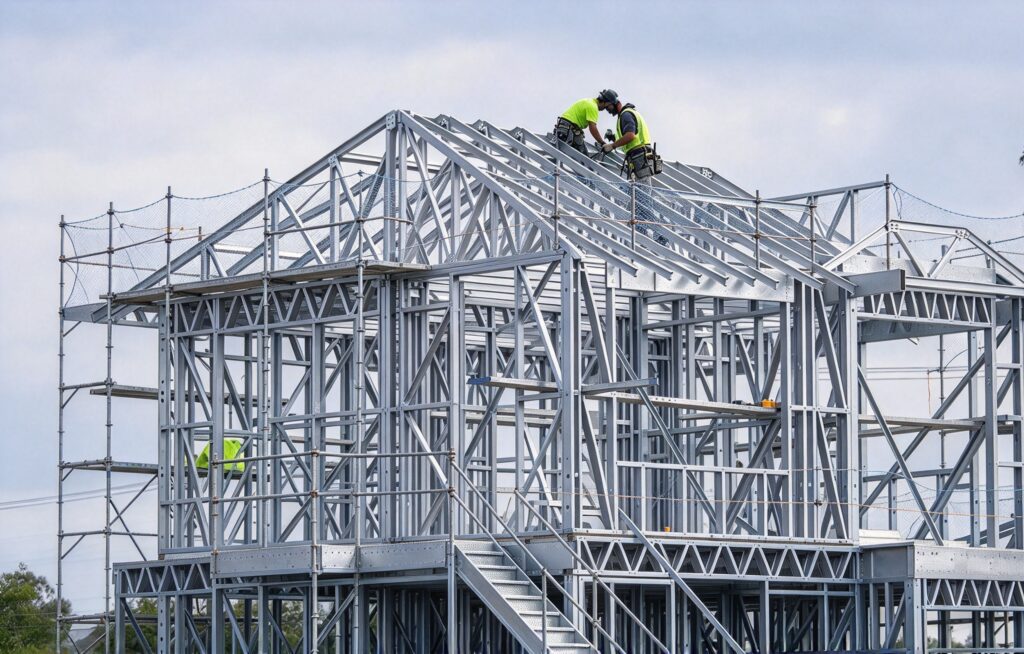
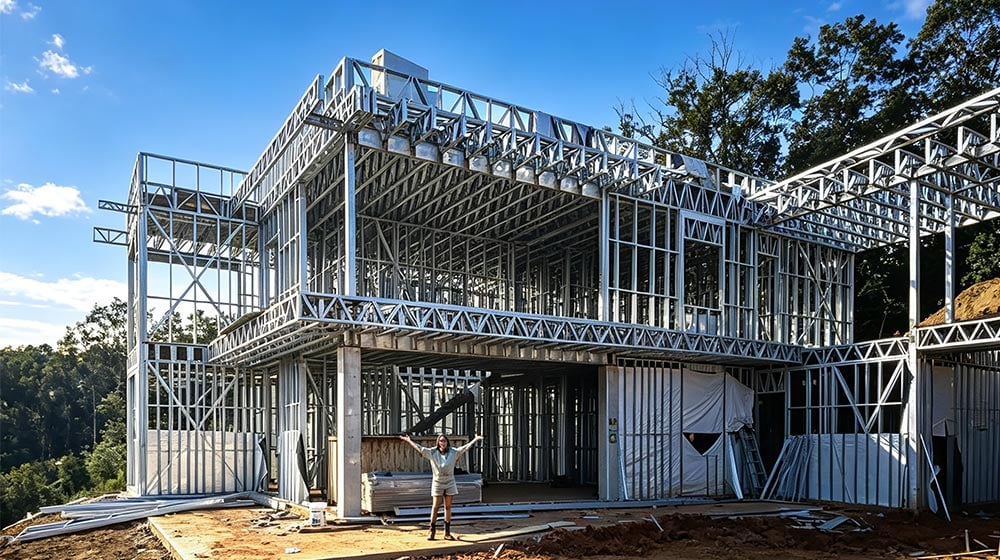
DEEPBLUE’s approach centres on light-gauge steel framing, with components prepared according to the building design. Factory production allows recurring dimensions and connections to be coordinated before installation.
Guest houses often contain repeated bedrooms and bathrooms. Consistent room arrangements can help organise structural details and material quantities, while different façades, balconies and shared spaces give the property its character.
The layout must also work for the operator. Housekeeping storage, reception, service access and guest circulation need enough space and sensible relationships. Maximising bedroom numbers without considering these functions can make everyday management less convenient.
A prefab guest house should combine efficient construction with practical hospitality planning. The frame is one part of that process. Materials, transport, installation and finishing need to support the same design and opening objectives.
Understanding Guest House Construction Costs
The cost to build a guest house depends on its complete specification and site conditions. Comparing only the structural frame or a headline price per square metre can overlook substantial parts of the development.
An assessment should include foundations, building components, freight, island transfers, installation, services and finishes. Furniture, equipment and operational preparation also require their own budget.
The following table retains the original article’s illustrative comparison. The cost rates and opening periods are scenario assumptions, not verified Maldives market averages or a DEEPBLUE quotation or delivery guarantee. Both approaches would need an equivalent scope for a meaningful comparison.
| Metric | Conventional Construction Scenario | Prefabricated Construction Scenario |
|---|---|---|
| Assumed construction cost per m² | USD 1,200 | USD 700 |
| Assumed total building area | 1,000 m² | 1,000 m² |
| Illustrative construction expenditure | USD 1,200,000 | USD 700,000 |
| Assumed time to opening | 12 months | 3 months |
| Number of guest rooms | 20 | 20 |
| Assumed average occupancy | 70% | 70% |
| Occupied room nights per full year | 5,110 | 5,110 |
| Assumed average room rate | USD 80/night | USD 80/night |
| Illustrative annual room revenue | USD 408,800 | USD 408,800 |
| Illustrative construction expenditure difference | — | USD 500,000 |
| Additional room revenue from opening nine months earlier | — | USD 306,600 |
| Combined expenditure difference and additional gross room revenue | — | USD 806,600 |
The final figure combines an assumed construction expenditure reduction with additional gross room revenue. It is not net profit, an investment return or a demonstrated project saving.
These calculations show why guest house construction costs and opening schedules should be considered together. They also show why clear assumptions matter: changing the specification, construction period or occupancy can substantially change the result.
Structural Quality and Coastal Design Priorities
For island accommodation, durability and structural design deserve the same attention as construction efficiency. The building system must respond to the particular site and its exposure conditions.
The following priorities are relevant when exploring Maldives guesthouse solutions, whether the project uses prefabricated components or another construction approach.
1. Corrosion Protection
Coastal exposure makes the protection of steel components and connections important. Suitable coatings, compatible fasteners and details that limit trapped moisture should be considered together.
Corrosion resistance depends on the complete protection strategy, including installation details, inspection access and maintenance. It should not be assumed from the framing material alone.
2. Wind Resistance
The structure, roof, cladding and connections must be designed for the relevant wind conditions. Loads need a continuous path through the building to its foundations.
Building height, geometry, openings and exposure all affect this assessment. A general wind-speed claim cannot establish the performance of every guest house design.
3. Structural Weight and Foundations
Light steel framing can provide a relatively lightweight structural approach compared with some heavier systems. This may be useful when considering component handling and structural loads.
However, foundation design still depends on ground conditions and the building itself. A lightweight frame does not remove the need for an appropriate foundation.
4. Transport and Assembly
Factory-prepared components can be planned around shipment and installation requirements. For an island project, the journey includes unloading, onward transfer and movement to the construction site.
Packaging, component dimensions and handling equipment should suit that route. Efficient production is most useful when deliveries and site activities are coordinated.
5. Energy and Water Systems
Solar equipment, water treatment and rainwater collection may be explored where appropriate. Their space requirements and service routes should be considered early.
These systems need their own design and capacity assessment. They are selected around operating needs rather than automatically included because the building is prefabricated.
6. Architectural Character and Guest Comfort
Comfortable rooms, practical bathrooms, shaded outdoor areas and an appealing entrance contribute to the guest experience. The building should support its intended accommodation style.
DEEPBLUE can discuss building materials alongside the structure. Insulation, glazing and weather protection need to work together; steel framing itself does not provide insulation.
Who Could Consider This Approach?
Prefabricated accommodation may suit several development types:
- Local entrepreneurs and community groups planning an owner-operated guest house.
- Guest house and hotel operators considering additional rooms or another property.
- Resort operators exploring staff accommodation or separate guest buildings.
- Landowners and development partners assessing a hospitality concept for their site.
Their priorities will differ. An owner-operated guest house may focus on manageable running costs, while a larger accommodation scheme may place greater emphasis on repeated room layouts and construction sequencing.
A prefab hotel or guest house approach should be assessed against those needs. The most suitable solution depends on the building scale, required facilities and way the property will operate.
Moving from a Concept to a Practical Development
A clear accommodation brief provides a useful starting point: room count, guest experience, approximate building area and architectural character. These decisions help the team consider how the layout, structure and materials fit together.
Evaluate cost, construction time and operating potential as connected decisions. A property that opens sooner still needs comfortable rooms and dependable services. A lower construction cost should also be considered alongside maintenance and daily operation.
DEEPBLUE’s approach for developers and builders provides a starting point for exploring this coordination. The aim is to develop a building approach that supports the accommodation business, rather than selecting a construction system in isolation.
Discuss Your Maldives Guest House Concept
Are you planning a guest house, additional tourist accommodation or staff housing in the Maldives? DEEPBLUE SMARTHOUSE can help you explore a prefabricated building approach suited to your concept.
Contact our team to discuss how light steel construction, practical layouts and coordinated materials could support your development.