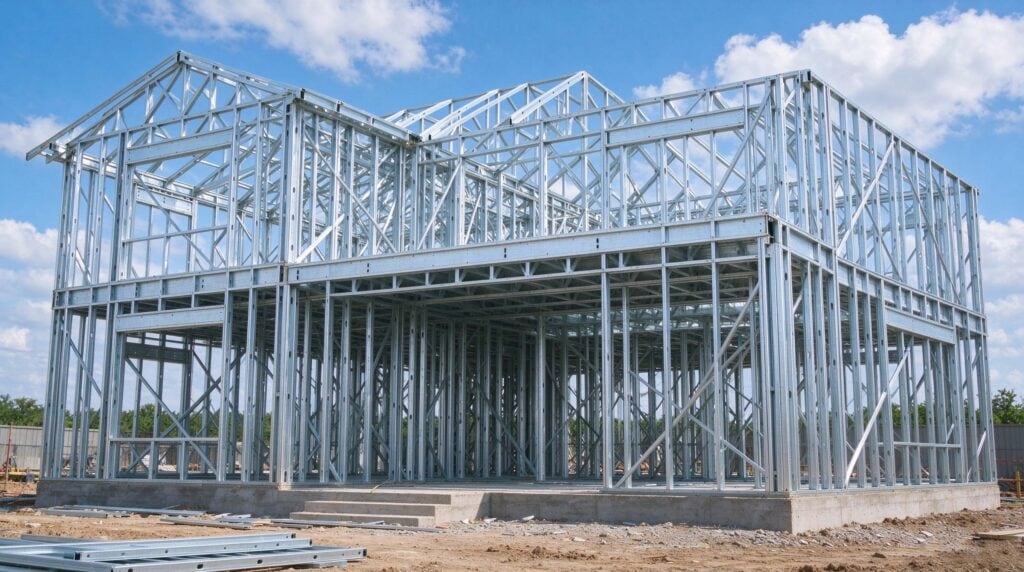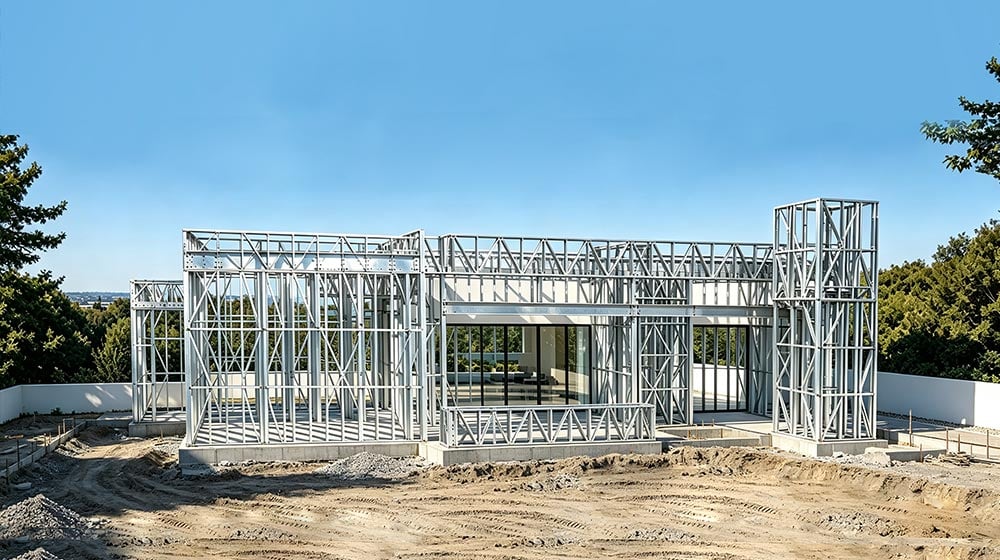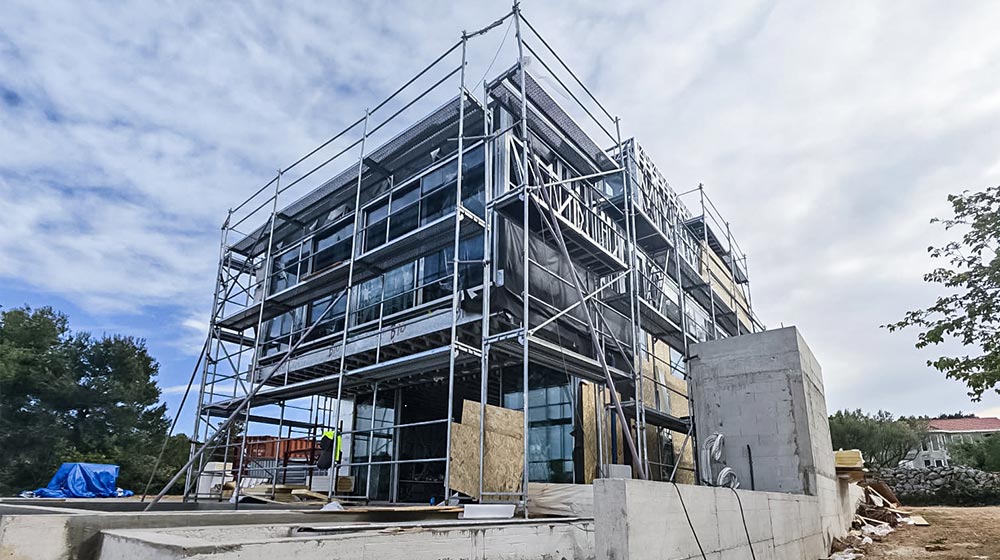
For developers, hospitality operators, and contractors, sourcing a pool for their prefab or modular construction projects can reduce onsite risk compared to a traditional pool build.
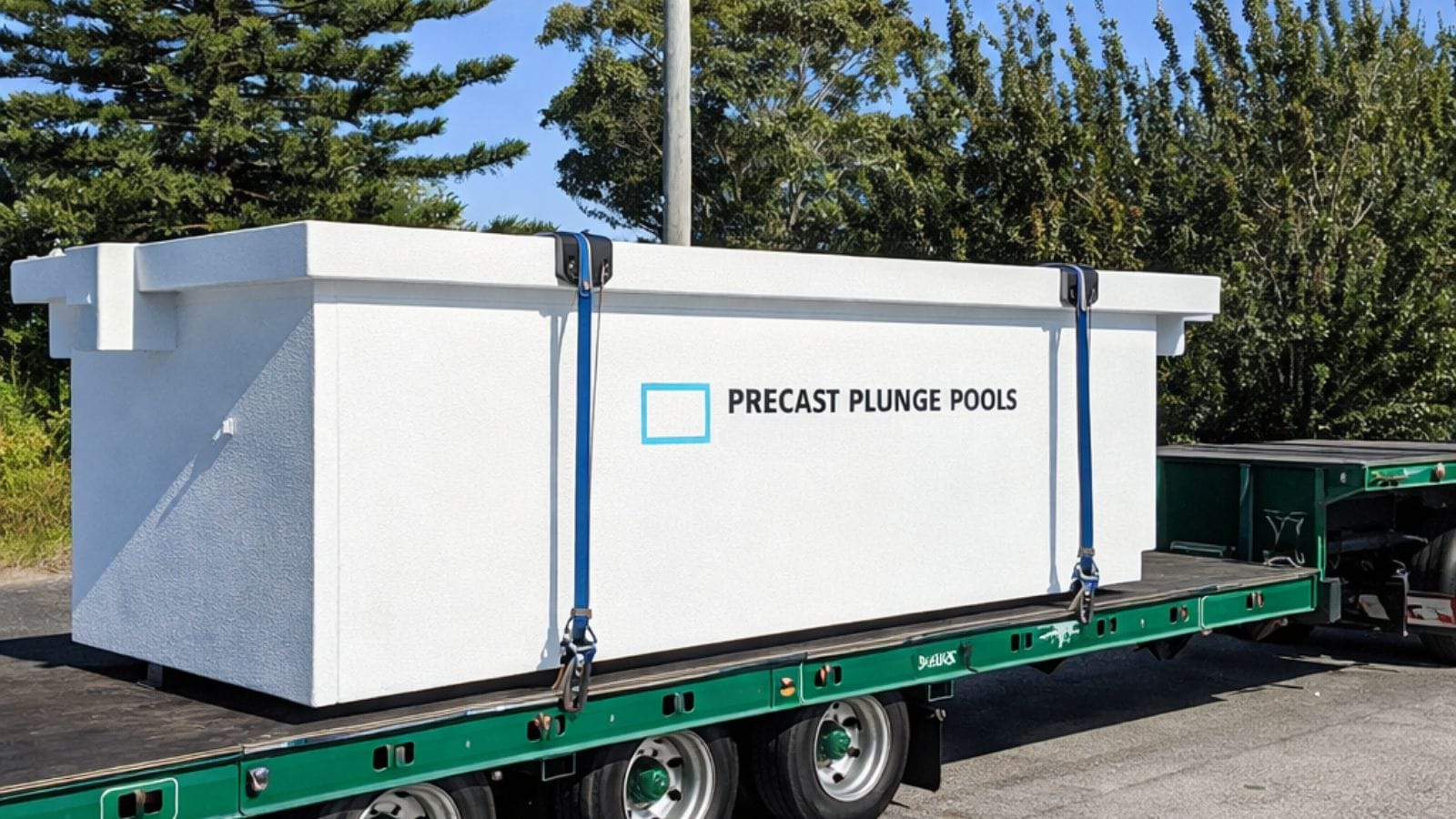
What a Precast Concrete Pool Is
A precast concrete pool is a pool shell produced offsite, then delivered and set into place—typically installed in-ground as an inground swimming pool after excavation and base preparation. Because the pool is “built” in a factory, core dimensions and finish quality can be more consistent across projects, which helps procurement and project controls.
This productized workflow is useful when you want fewer moving parts onsite, clearer interfaces, and a repeatable scope for your installer and GC.
When to Use a Plunge Pool over a Swmming Pool
A plunge pool is often the most practical pool type when you need a strong amenity footprint without dedicating a large area to water. In many developments, it becomes the visual focal point of the yard and supports broader outdoor living programming such as a deck, lounge zone, or compact spa corner.
For buyers comparing pool size options, the decision is usually driven by:
- Guest/user intent (cool-off vs. lap swim)
- Site access and staging constraints
- Standardization needs across multiple builds
- Long-term operations (cleaning, heating, service access)
Precast Pool Installation: Crane Planning, Access, and Backfill
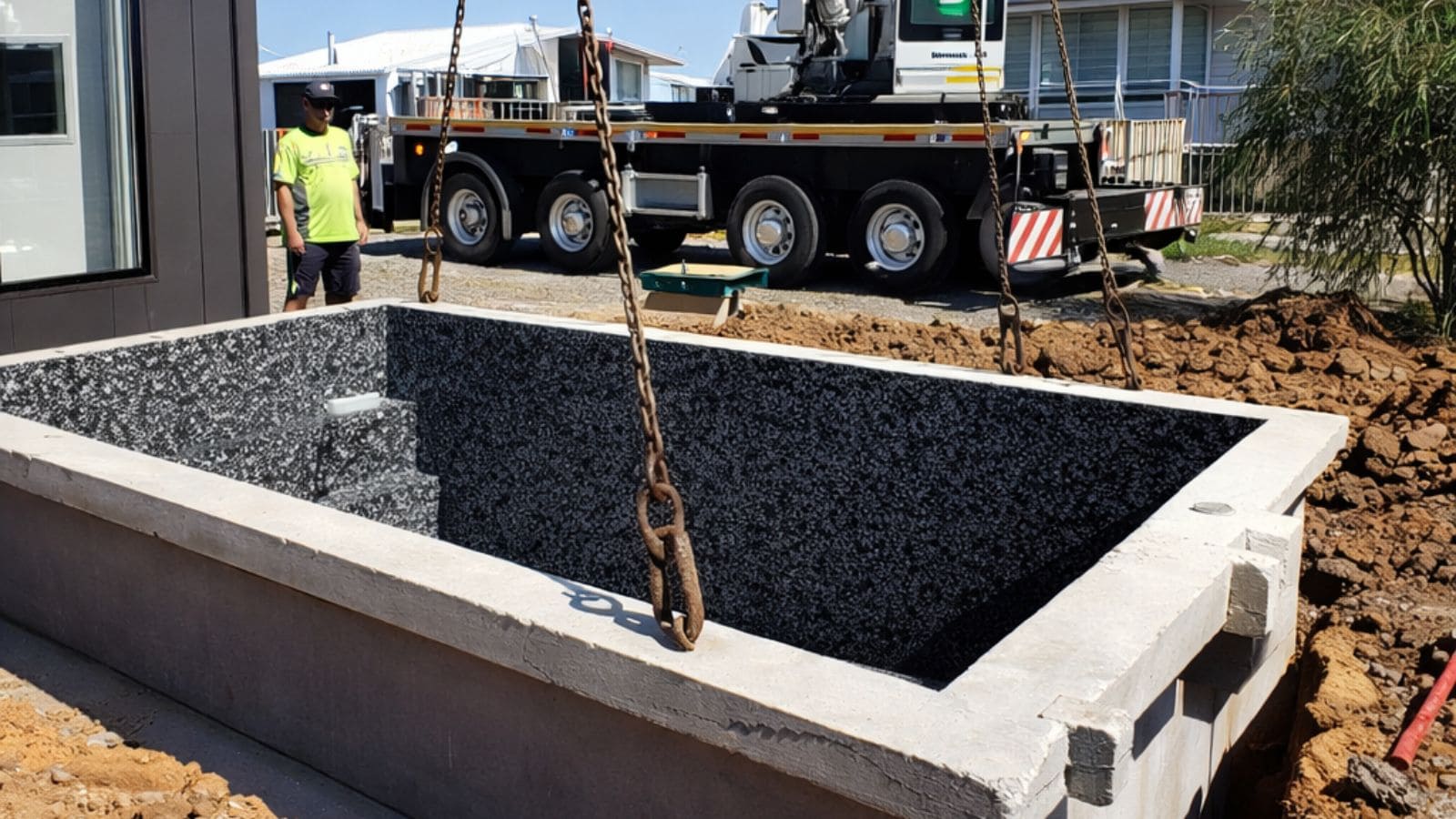
Most precast pool installation success comes down to logistics discipline. The pool can be installed quickly once the site is ready, but teams must lock in the constraints early—especially crane access and lift conditions.
Key planning items include:
Delivery + crane set
- Confirm truck route, turning radius, and overhead clearance.
- Plan crane setup and lift path (utilities, trees, structures).
Excavation + base
- Prepare excavation dimensions and a stable engineered base.
- Align tolerances so the pool shell seats correctly.
Utilities & equipment
- Coordinate plumbing and electrical rough-ins before the set.
- Confirm how skimmers and returns integrate with your pool equipment scope (for example, skimmer placement and service clearance).
Backfill
- Specify the backfill method and materials so the shell is supported as designed, avoiding settlement and finish issues.
If your concept includes a semi-recessed or partially exposed aesthetic, note that some sites can be designed as semi-recessed installations—but this should be engineered as part of the overall structure and drainage plan.
Pool Interior Finish and Tile Options
Precast Concrete vs. Fiberglass Pools vs. Gunite: How to Compare Like a Buyer
When teams compare fiberglass pools with a precast concrete solution, the decision should not be reduced to a single line-item price. The operational question is: what minimizes schedule risk and rework while meeting the design brief?
A useful comparison frame:
- Fiberglass pools: can be fast to place, but shapes/finishes may be constrained and repairs can be specialized depending on the system.
- Gunite pool / shotcrete: highly flexible and potentially “fully custom,” but often involves longer onsite duration and more variables in field execution.
- Precast concrete pool: often chosen for repeatability, factory consistency, and faster installation once site readiness and lift logistics are solved.
This is why many teams specify precast for compact precast concrete plunge pools where a reliable install and clean finish are priorities.
What to Ask Suppliers during Procurement
“Built to last” should be translated into procurement questions and documentation requests. For any pool builder or supplier, ask for:
- Engineering/spec package and installation requirements
- Quality control standards (factory checks, finish tolerance)
- Warranty scope clarity (structure vs. finishes vs. equipment)
- Support model for your installer network
- Clear limits on customization vs. standard options
Avoid vague claims like “unmatched strength” unless backed by engineering documentation. In commercial environments, “high-performance” should mean measurable requirements: loads, durability assumptions, and finish standards.
Practical Notes: Above-Ground, Semi-Recessed, and Site Constraints
Not every site can support the same approach. Some projects consider an above-ground look, while others require the pool to be installed in-ground for guest experience and safety. In constrained lots, overhead clearance and crane staging can be decisive.
Also, be cautious about scope creep into niche comparisons (like vinyl liner pools). For most procurement pipelines, it is more productive to focus on the three common categories: precast, fiberglass, and gunite/shotcrete.
Add a Precast Concrete Pool to Your Prefab Project
DeepBlue’s precast pools are an optional add-on service designed to complement our core prefabricated building delivery—ideal when you want the pool scope to be more predictable and easier to coordinate with the overall site program.
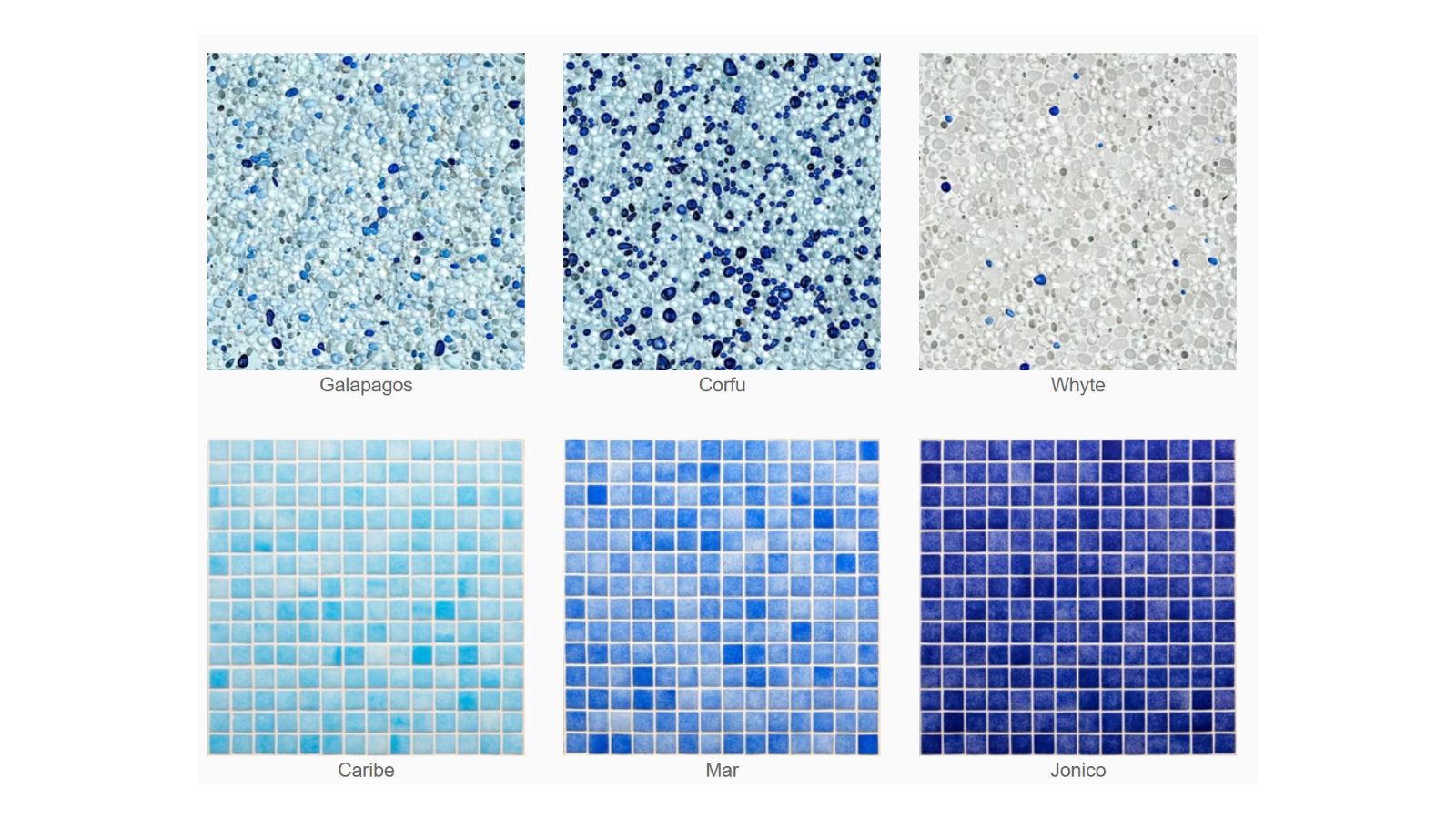
Our Serenity Pool range covers both full-size pools and plunge pools, with water lengths from 2.5 m to 7.0 m, a consistent depth profile, stone coping, and fully tiled finishes. You can also choose from multiple mosaic waterline tile styles and follow a clear installation workflow.
Explore sizes, installation steps, and tile-line choices here:
https://www.deepbluehome.com/about-precast-pool
FAQ
How to choose between a plunge pool and a full swimming pool for hospitality projects?
Use the decision lens of guest intent + footprint + serviceability. A plunge pool typically maximizes amenity value per square meter for compact sites, while a larger swimming pool is justified when “in-water experience” is central to the property concept (family use, longer stays, higher occupancy). From a rollout perspective, plunge pools are also easier to standardize across multiple sites.
What site conditions affect feasibility and price?
Three constraints drive most outcomes: delivery access, lift feasibility, and groundworks complexity. If the route cannot accommodate transport, or if a crane cannot safely set the shell due to overhead obstructions, the project may require redesign or a different pool type. Soil conditions, drainage, and retaining requirements can materially change excavation and base scope.
What information should I include in my quote request?
To get a faster feasibility check and a tighter budget range, include the basics your supplier needs to confirm logistics and scope:
- Location: city + country
- Pool intent: plunge pool or swimming pool
- Placement concept: in-ground or semi-recessed
- Site access constraints: gate width, turning area, overhead lines/obstructions
- Finish direction: preferred tile look and coping style
With these details upfront, most suppliers can respond with fewer assumptions and fewer follow-up emails.
What finish/spec choices most impact long-term operations?
The biggest long-term operational drivers are:
- Finish durability & cleanability: how well the surface holds up and how easily it can be cleaned
- Waterline detailing: waterline areas show buildup first, so detailing matters
- Equipment accessibility: space and layout for routine service and replacements
- Clear scope boundaries: who supplies/installs equipment and who handles commissioning
A premium finish can be worth it—but only when it aligns with realistic maintenance cycles and local service support.