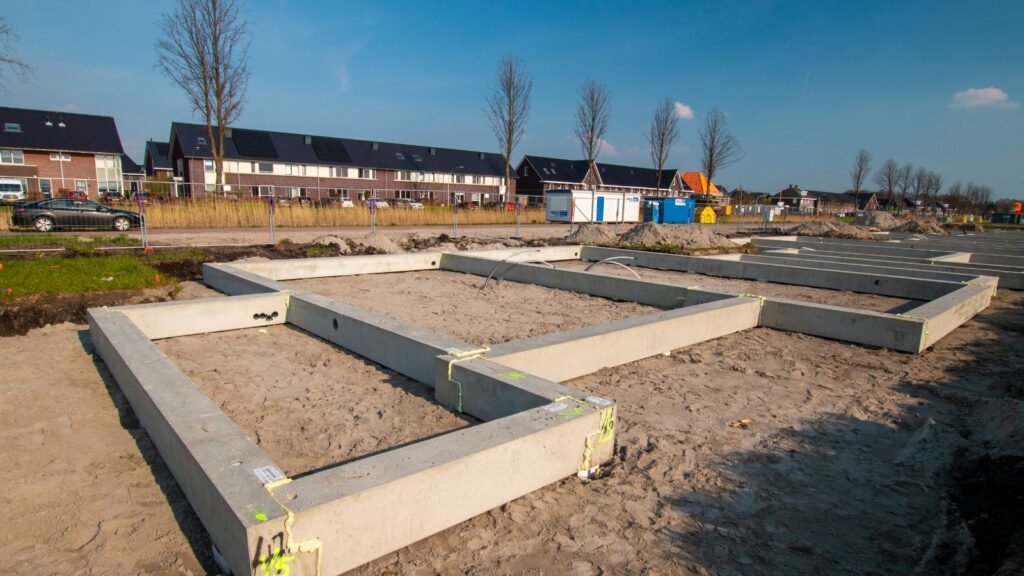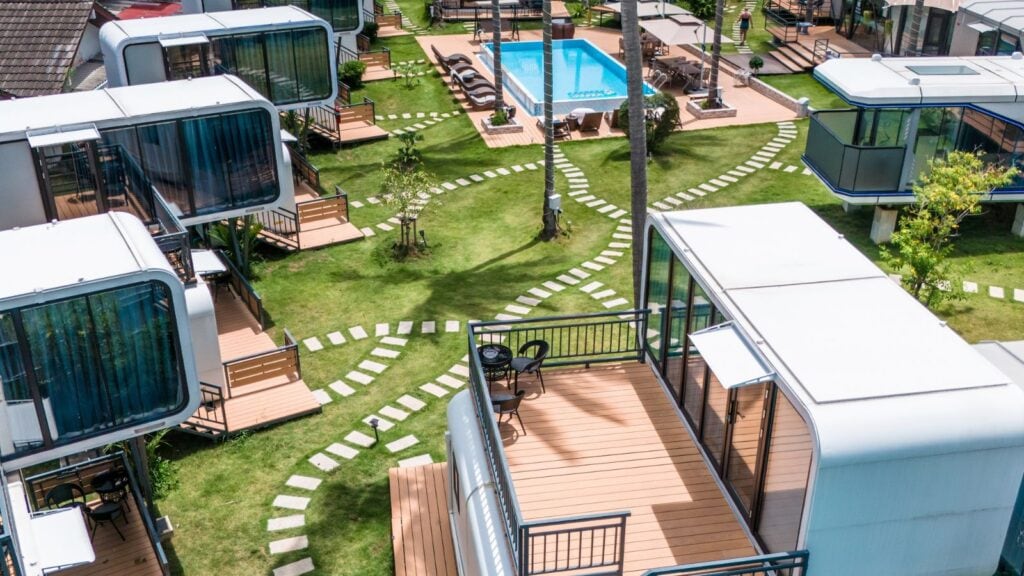
Traditional construction is exposed — to weather delays, labor shortages, subcontractor coordination failures, and cost overruns that compound with every week of schedule slippage. A panelized building system removes that exposure by shifting the majority of construction into a controlled factory environment, where quality is engineered in before a single panel ever reaches the site.
Instead of building every wall, floor, and roof component from raw materials on site, the core structural elements are manufactured in advance, packed for shipment, and delivered ready for rapid assembly.
This isn’t a shortcut. It’s a more disciplined way to deliver buildings at scale.
What Is a Panelized Building System?
A panelized building system is a factory-manufactured construction method built around engineered components, including:
- External wall panels
- Internal wall panels
- Floor cassettes
- Roof trusses and roof panels
- Insulation systems
- Windows and doors
- Vapour barriers and membranes
- Service cavities and selected MEP provisions
Depending on project scope, panels can be supplied as open frames, semi-finished panels, or fully closed wall systems — insulated, sheathed, membraned, and glazed before they leave the factory.
Every component is designed in BIM, engineered to the applicable local building code, and produced on CNC-controlled equipment before shipment — giving developers a level of precision that site-built framing cannot match.
From Site Construction to Site Assembly
The distinction is simple but consequential.
In conventional construction, most of the work happens outdoors, exposed to weather and dependent on the sequencing of multiple trades. Quality is only as good as the site conditions and the crew on any given day.
In panelized construction, the building is engineered into discrete components before production ever begins. Those components are manufactured, labeled, packed, and delivered in installation sequence — so the site crew is assembling a designed system, not fabricating one from scratch.
The result: less variability, fewer surprises, and a schedule that isn’t hostage to the weather.
Faster Project Delivery
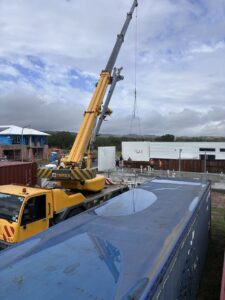
Panelized systems let site works and factory production run in parallel instead of in sequence.
While foundations and civil works are underway on site, the structural frames, wall panels, floor systems, and roof components are being manufactured in the factory. Once the foundation is ready, the building envelope goes up fast.
For suitable residential and light commercial projects, the structural shell and weather-tight envelope can often be completed in days to weeks rather than months — depending on project size, site conditions, and local labor availability. That compression directly protects developer financing costs and construction loan timelines.
More Consistent Quality
A factory floor is a controlled environment in a way a job site never will be.
Panel dimensions, screw positions, openings, and structural connections are checked before shipment — not discovered as defects after installation. Materials are protected from rain, mud, and site damage throughout production.
Digital design files transfer directly to CNC production equipment, removing the manual measurement errors that accumulate in stick-frame construction. Every panel is identified through drawings, labels, or QR codes, so installation teams know exactly what goes where — reducing rework and installation error on site.
Reduced Site Labor Dependency
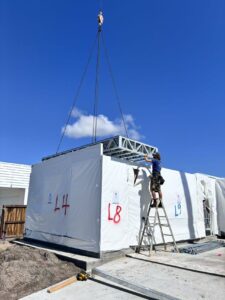
Skilled labor shortages and rising labor costs are structural problems for the construction industry, not temporary ones.
A panelized system reduces the cutting, framing, and material processing that would otherwise happen on site, letting a smaller, more focused installation crew do more with less. It also reduces a project’s dependence on a large bench of specialist trades during the structural phase.
This matters most where it’s hardest to solve on site: large housing developments, remote and regional projects, and markets where qualified labor is scarce or expensive.
Better Cost and Schedule Control
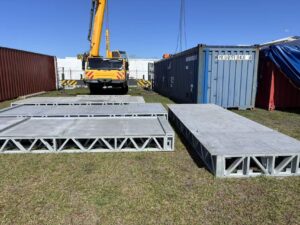
Cost overruns in traditional construction are rarely one big failure — they’re the accumulation of delays, rework, labor inefficiency, and material waste.
Panelized construction improves predictability because the building is fully defined before manufacturing starts. Before production begins, the project team confirms:
- Structural design
- Panel dimensions
- Material specifications
- Connection details
- Packing sequence
- Installation procedures
- Production schedule
That level of upfront definition tightens coordination between architects, engineers, manufacturers, contractors, and developers — and it’s what allows a manufacturer to stand behind a schedule instead of hedging it.
Less Material Waste
Factory-based cutting and processing is inherently more accurate than field fabrication.
Steel framing members, boards, membranes, and insulation are optimized against the digital model before they’re cut, and offcuts and production waste are managed as part of the manufacturing process — not left in a site dumpster. The result is a cleaner site, less material handling, and more efficient use of resources across the project.
Suitable for a Wide Range of Building Types
Panelized building systems apply across a broad range of asset classes, including:
- Detached houses and duplexes
- Townhouses and multi-family housing
- Apartments
- Hotels and resorts
- Schools and offices
- Worker accommodation
- Affordable housing developments
The system adapts to different climates, architectural styles, and local building codes. Wall thickness, insulation performance, fire rating, acoustic performance, corrosion protection, and wind resistance are all engineered to project-specific requirements — not treated as one-size-fits-all.
The DEEPBLUE Panelized Building System
DEEPBLUE SMARTHOUSE engineers and manufactures panelized building systems using light gauge steel framing, BIM coordination, and CNC manufacturing for developers, builders, hospitality groups, and governments delivering projects internationally.
Depending on project scope, our system can include:
- Light gauge steel wall frames
- Closed wall panels
- Pre-installed insulation
- Sheathing and external membranes
- Service battens
- Floor joist cassettes
- Roof trusses
- Windows and doors
- Numbered packing lists and installation drawings
Every project is engineered to the architectural design, structural requirements, local climate, and applicable building code — backed by:
- 17+ years of international project experience
- 10,000+ structures delivered across 50+ countries
- ICC-ES certification, with annual factory inspection by ICC-NTA, for the U.S. market
- Light gauge steel systems engineered for high wind and seismic resistance
The objective isn’t to remove design flexibility — it’s to remove uncertainty, while keeping architectural intent intact.
Construction Is Becoming Manufacturing
The construction industry is shifting from manual site production toward digital design, factory manufacturing, and controlled assembly. This doesn’t remove the need for architects, engineers, or builders — it gives them a more coordinated system to build with.
The principle is straightforward:
Don’t build every component on site. Engineer it, manufacture it precisely, deliver it on schedule, and assemble it with control.
Planning a development, resort, or housing project and evaluating panelized or modular building systems? Talk to our team about your project scope, timeline, and technical requirements — we’ll advise on the right system approach and next steps.