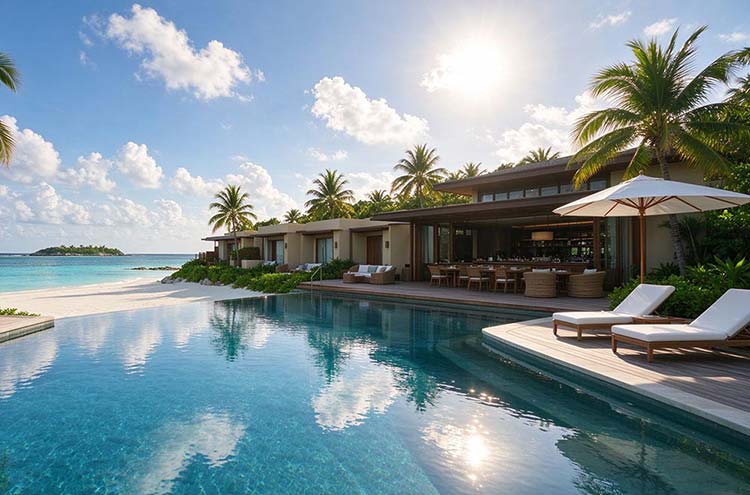
AI has pushed data center building back into the boom cycle. Training models needs compute, cloud providers keep adding capacity, and enterprise systems are still moving over, so another hall breaks ground almost every week. Most of these sites are rural. The electrical and pipefitting crews arrive long before the server hall has power, and the dormitory blocks are not up yet. The first question on site is not how to lay out the racks. It is where the crew sleeps.

The Crew Is Here. The Beds Are Not.
We have been building prefab houses for years, and on jobs like these we have stopped thinking in single buildings. Server halls come online in stages and crews arrive in waves.
Order the camp as one build and the trouble shows up at both ends. Here is where.
-
Too few beds at the start, so people leave during the mechanical and electrical peak and the energisation date slips
-
A row of empty beds after peak, capital tied up in them, and a demolition bill at the end
-
The camp needs a construction crew of its own, people who should have been pulling cable and setting equipment
Workers turn up with nowhere to sleep, they go, and the schedule leaks from there.
For a while, the site holds nothing but the frame.
Before You Compare Unit Prices, Ask Three Things
The question at procurement is not what one container unit costs. You can put these three to any supplier.
-
How soon does the first batch take people
-
Can later batches follow the same drawings
-
Can the units move to the next project when this one ends
Capacity comes online in stages, headcount rises and falls with it, sites sit out in the country with little rental housing nearby, and the job runs for years before the whole operation moves on. Get those three answered and the camp stops being a one time cost.
Our Answer Is to Build the Camp in Batches
Start with who we are. DEEPBLUE SMARTHOUSE has been making light steel prefab buildings since 2009, with more than 10,000 homes delivered in more than 60 countries. In North America, Europe, Australia and New Zealand, approvals ask for material and system documents, and that is what our ISO9001, ISO14001, ISO45001, ICC-ES, EN1090 and Australian and New Zealand certifications are for.
Those three questions each get an answer.
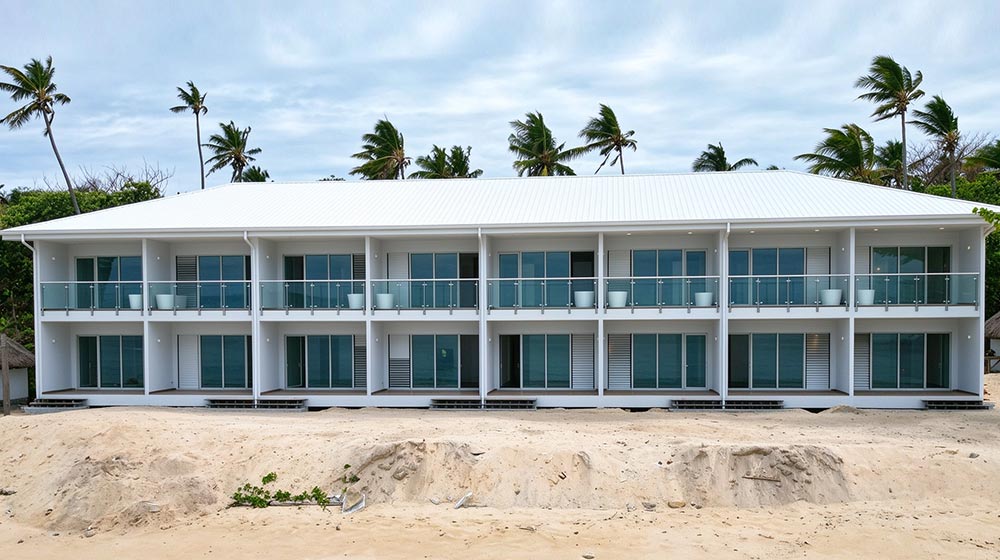
- For a fast first batch, Foldable Home units leave the factory with walls, floors, electrical, plumbing, bathroom and kitchen already fitted, and two workers can put up one module in five days, with up to 72 square metres per module and combinations to three storeys. Our light steel dormitory solution, often used on remote sites, goes from factory to delivery in about 30 to 60 days
- For adding later, each Modular Homes unit carries a QR code so every component and step can be traced, so every batch does not need a fresh design.
- For moving on, the Foldable Home is built to be relocated, taken apart, shipped and raised again at the next site
Buying a camp this way is not the same as putting up temporary rooms on site and pulling them down at the end. The same model can be ordered batch after batch. Every site still needs its own check. As for what we have actually built, two jobs from our records say more than a description.
What Our Records Actually Show
Haven House, is a one storey Foldable house of 56 square metres delivered in Melbourne, Australia, and the record marks it as used for four dormitories. It leaves the factory as a complete unit. That is the shape of a first batch that takes people without a long build on site.
Click to view >>
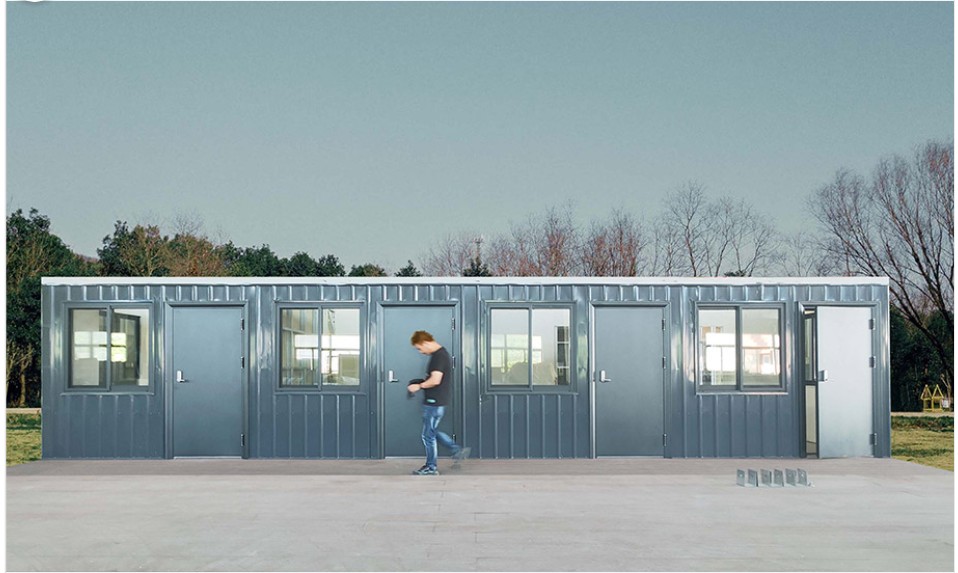
Lautoka House in Lautoka, Fiji, is a two storey Townhouse of 672 square metres with six units, and the record labels it as dormitory use. One dwelling here, six units there. Those are the two shapes you are choosing between when you plan the first batch and the ones after it.

Fast Is Fast. These Still Depend on the Site.
Give the factory what it does well and the work left on site becomes clear. A few things do not go away, and they belong on your list before you ask for a quote.
-
Approvals for temporary buildings, fire separation, water and power hookups, and what the ground can carry all need checking again for each site
-
Before units move to the next project, the connections and the frame need another look
-
We would rather go through these at quotation than bring them up during demobilisation
One honest note. If the camp is for one short job and will never be used again, temporary rooms on site may well be the cheaper choice. If it has to follow a phased programme and move afterwards, repeatable drawings and batches are what pay off.
This round of data center building will run for a while yet. Server halls get added row by row as capacity comes online, and the place people sleep should follow the same rhythm. If you have a site about to start, send us the location, the staged programme, the peak headcount, and whether this accommodation has to be used again afterwards. With those four things we can put together a batch by batch configuration instead of a price list for one building. Ask first, order second.