Modular buildings has gained much traction in construction industry. If you. either as a procurement specialist or a developer, are trying to look for companies with demonstrated delivery capability, manufacturing maturity, and sector breadth, then this top 10 list of modular building companies is just for you: Each entry reflects how well a company performs against criteria that matter on real projects, read on and find out more!
DEEPBLUE SMARTHOUSE

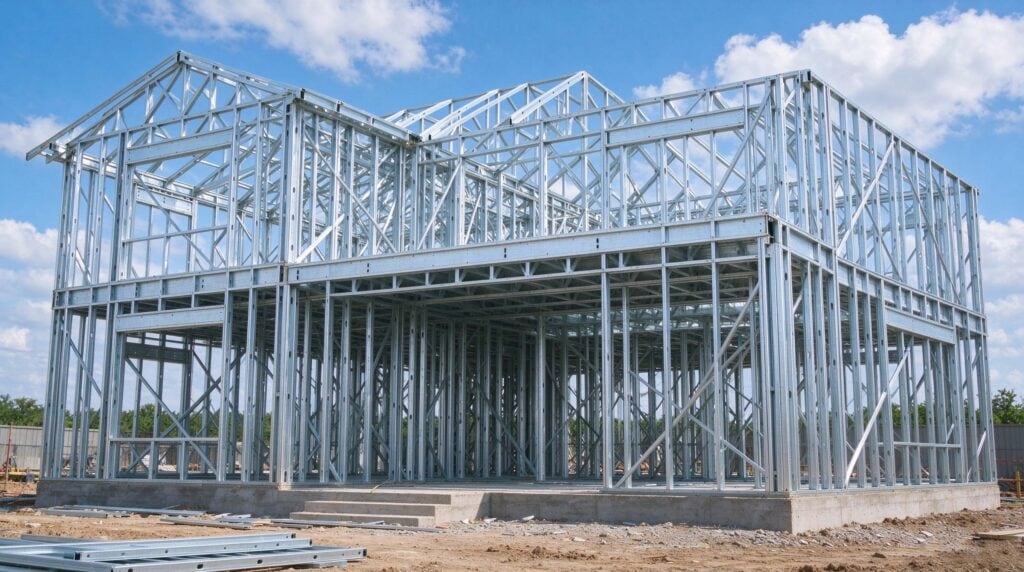
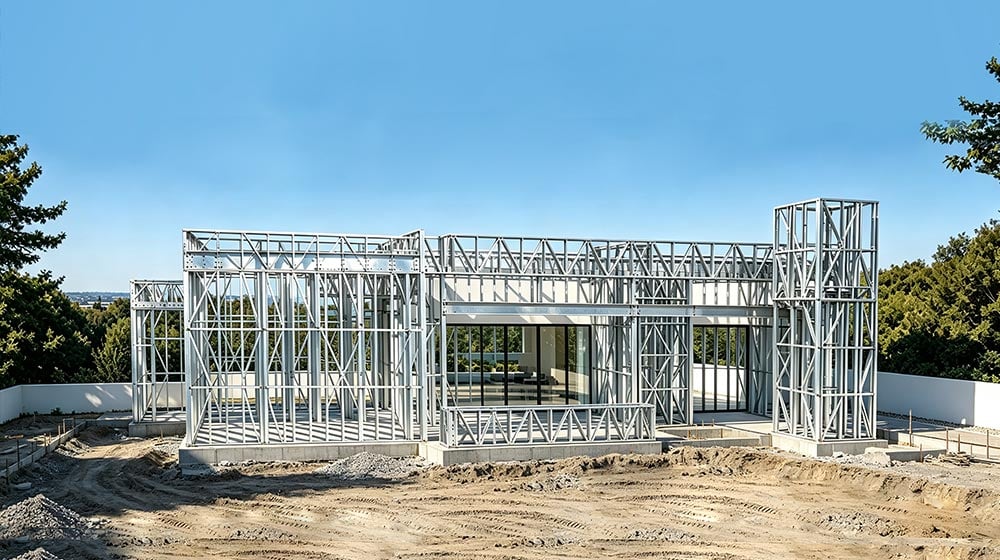
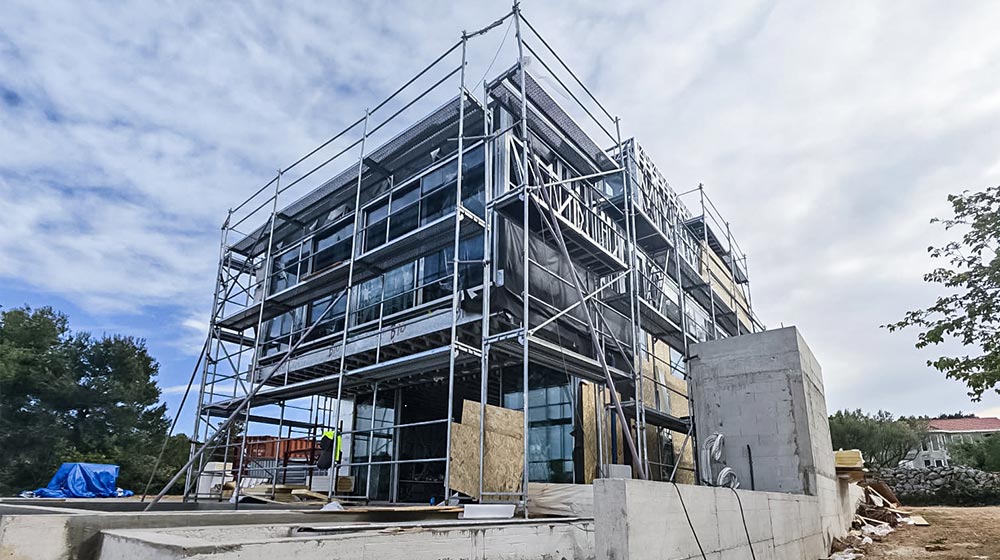
DEEPBLUE SMARTHOUSE is a Chinese prefabricated housing manufacturer specializing in light gauge steel frame and panelized building systems. Founded in 2009 and based in Ningbo, the company has delivered over 10,000 projects across 50 countries, including the USA, Australia, and European markets.
Its one-stop model covers design, engineering, structural calculations, manufacturing, and installation guidance under a single provider, which makes it possible for clients to provide their own drawings for custom development, and reduces coordination overhead for international buyers.
The company holds ISO 9001, ISO 14001, ISO 45001, EN 1090, and ICC-ES certifications, which supports compliance documentation for projects in regulated markets.
- Primary sectors: Residential, commercial, hospitality, institutional
- Manufacturing model: Light gauge steel frame, panelized systems, CNC production
- Notable geographic presence: 50 countries, with active markets in USA, Australia, and Europe
For developers and private buyers sourcing a factory-direct prefab partner with international delivery capability and broad product range, DEEPBLUE SMARTHOUSE offers a competitive and well-certified option.
Sekisui House, Ltd.
Sekisui House, a Japanese leader in residential construction, excels in off-site manufacturing with steel frame panels and modular pods. Its DfMA approach ensures quality at scale. Expanding into Australia and the US, Sekisui offers unmatched expertise in volume production and energy-efficient design for developers.
- Primary sectors: Residential, multi-family
- Manufacturing model: Factory-produced steel frame and modular pods
- Notable geographic presence: Japan, Australia, USA
Its integration of design, manufacturing, and development under one structure makes it a credible benchmark for evaluating other off-site providers.
Bouygues Construction
Bouygues Construction leverages its scale to deliver modular projects in social housing and hospitality, using proprietary systems and 3D-printed components. Unlike firms relying on conventional framing, it benefits from Tier 1 procurement and compliance capabilities for multi-jurisdictional projects.
- Primary sectors: Social housing, hospitality, commercial
- Manufacturing model: Proprietary modular systems, 3D printing integration
- Notable geographic presence: France, Europe, international markets
For large institutional or government-funded projects, Bouygues represents a partner with both technical depth and financial standing.
Skanska
Skanska, based in Sweden, is a leading global construction group known for modular methods in healthcare and offices. It standardizes modular components and uses virtual reality for design. Sweden’s residential sector favors prefabrication, influencing Skanska to apply modular logic to simplify large-scale construction.
- Primary sectors: Healthcare, commercial offices, infrastructure
- Manufacturing model: Standardized modular components, VR-assisted design
- Notable geographic presence: Sweden, USA, UK, Central Europe
Skanska suits procurement teams working on high-value institutional or commercial projects where design coordination, schedule certainty, and compliance documentation carry significant weight.
Laing O’Rourke
Laing O’Rourke uses Design for Manufacture and Assembly (DfMA) through its UK off-site facility, applying industrialized methods in infrastructure, healthcare, and commercial projects. Its Explore Industrial Platform (EIP) streamlines design to production, reducing rework and costs. The company operates in the UK, Australia, and the Middle East.
- Primary sectors: Healthcare, infrastructure, commercial, education
- Manufacturing model: DfMA, Explore Industrial Platform, owned factory
- Notable geographic presence: UK, Australia, Middle East
For complex institutional projects where procurement teams need an off-site partner embedded within a full delivery structure, Laing O’Rourke’s manufacturing investment is a genuine differentiator.
Lendlease Corporation
Lendlease integrates modular manufacturing into its property development, using in-house facilities and digital design tools for residential and commercial projects in Australia, the UK, and the US. Acting as both developer and builder, it aligns factory and site schedules early for greater efficiency.
- Primary sectors: Residential, mixed-use, commercial
- Manufacturing model: Owned modular facilities, digital design integration
- Notable geographic presence: Australia, UK, USA
Fleetwood Australia
Fleetwood shifted from caravan manufacturing to modular construction in Australia, using FRAMECAD for precise steel framing. Its projects cover education, social housing, and remote accommodation. The Modular Building Systems acquisition boosted capacity, while the Legacy Living Lab showcases true sustainability. Fleetwood excels in remote and complex-regulation projects.
- Primary sectors: Education, social housing, remote accommodation
- Manufacturing model: FRAMECAD cold-formed steel, automated production
- Notable geographic presence: Australia
Dexterra Group
Dexterra, through its Horizon North division, excels in workforce accommodation and social housing using modular units made in factories to cut costs and risks. Expanding into healthcare and education, it suits Canadian northern projects where labor is costly and logistics challenging.
- Primary sectors: Workforce accommodation, social housing, healthcare, education
- Manufacturing model: Standardized modular units, factory production
- Notable geographic presence: Canada
Premier Modular Limited
Premier Modular, a UK specialist, provides temporary, relocatable, and permanent modular buildings for education, healthcare, construction, and commercial sectors. Their East Yorkshire factory produces modular units to UK standards, offering rental and sales options. Their rental fleet supports flexible, fast-track public sector projects.
- Primary sectors: Education, healthcare, site accommodation, commercial
- Manufacturing model: Volumetric modular, UK factory production
- Notable geographic presence: UK and Europe
Red Sea International
Red Sea International (RSI), based in Saudi Arabia, specializes in modular buildings for large-scale workforce accommodation and remote infrastructure. Operating locally, it serves the Middle East, Africa, and emerging markets, excelling in rapid delivery of standardized units for energy, mining, and construction projects with compressed timelines.
- Primary sectors: Workforce accommodation, remote site infrastructure, hospitality
- Manufacturing model: High-volume modular unit production, factory manufacturing
- Notable geographic presence: Saudi Arabia, Middle East, Africa