For developers of hospitality projects, cost is always a major challenge. To control the budget, the modern hospitality industry has widely adopted the method of modular hotel construction.
This guide breaks down the financial picture of prefab modular hotels. For developers planning a new project or comparing bids from manufacturers, this article will cover:
- What actually belongs in a complete modular hotel budget.
- The site and design factors that affect pricing.
- Design choices and execution strategies to prevent cost overruns.
- How the final economics and timeline compare to traditional hotel builds.
What a Project Budget for a Modular Hotel Must Include
A credible modular hotel construction cost estimate has to account for land, site work, factory production, transport, onsite assembly, finishes, FF&E, permitting, and financing costs, all of which affect the final number for any modular hotel project.
Cost Per Key, Gross Area, and Total Development Cost
Cost per key is the standard way to compare hotel projects of different sizes. It divides total development cost by the number of guest rooms.
A useful budget separates three figures:
- Cost per key: total project cost divided by room count
- Cost per gross square foot: construction cost across the full building footprint, including corridors, back of house, and public areas
- Total development cost: land, hard costs, soft costs, FF&E, and financing combined
Relying on cost per key alone can mislead you if amenity space or public areas differ between hotel units and comparable properties.
Factory Scope, Site Scope, and Common Exclusions
Modular hotel construction costs typically split into factory scope and site scope.
Factory scope covers module fabrication, interior finishes, plumbing, and electrical rough-in completed under controlled conditions.
Site scope covers foundations, utility connections, module setting, corridor and podium construction, and final finish work. Common exclusions in early quotes include:
- Land acquisition and site survey costs
- Utility extensions beyond the property line
- Furniture, fixtures, and equipment (FF&E)
- Permitting and impact fees
- Contingency reserves
The Modular Hotel Design Factors that Affect Pricing
A quoted price per key means little in isolation. Comparing modular hotel construction costs across different building types—without adjusting for scope, brand standard, and site complexity—produces numbers that are unusable for underwriting. Ultimately, final pricing depends heavily on several inherent design variables:
Hotel Type, Room Count, and Height
There are many types of hotels that can utilize modular construction, either entirely or partially. However, a limited-service property with standard rooms costs far less per key than a full-service hotel with suites, banquet space, and a spa, as standardized layouts reduce factory tooling costs.
Height matters as well; modular construction works exceptionally well up to mid-rise heights (four to six stories) before structural and transport logistics add significant costs.
Location, Labor Market, Transport, and Site Access
Transport distance from the factory to the site affects cost directly, as longer hauls mean higher freight costs. Local labor markets dictate the price of site scope work like foundations and final connections.
Furthermore, tight urban sites with restricted crane access or limited delivery hours can add schedule risks that offset some modular savings.
It is recommended to consult the modular hotel manufacturers and learn whether they offer turnkey one-stop services that include transportation and onsite assembly.
Finishes, Building Codes, and Structural Requirements
Brand standards for flooring, fixtures, and casework dictate material costs regardless of the construction method.
Local building codes, wind loads, and seismic requirements also shape the structural design. These must be locked early, as late code-compliance changes are highly expensive once factory production begins.
Developers should partner with a modular manufacturer that possesses in-house engineering and design capabilities, and proven experience in global modular projects that are compliant with local codes.
Modular Manufacturer’s Design Choices that Protect Budget
While location and brand tier are inherent variables, developers can work with modular manufacturers to actively protect their budgets through smart decisions during the feasibility phase.
Standardizing Rooms without Diluting Guest Experience
Repeating a small number of modular hotel room types across floors lowers factory tooling costs and speeds up production.
This does not mean rooms have to be boring, as developers can apply varied finish packages, artwork, and furniture layouts on top of a shared structural module, ensuring guests experience design variety while the factory benefits from repetition.
Prioritizing Early MEP Coordination
Poor coordination of plumbing, electrical, and HVAC connections between modules is a leading cause of cost overruns and delays.
Securing early engineering input for MEP routing ensures that modular units connect seamlessly during onsite assembly and meet strict hotel prototype standards.
Selecting the Right Level of Offsite Completion
The term “modular” encompasses a wide spectrum of delivery states. Modules can arrive on-site as basic structural shells (often just framed walls with MEP rough-ins) or as volumetric, fully finished rooms complete with installed bathroom pods. Selecting the optimal level of offsite completion depends heavily on the installation plan and the hotel’s brand tier.
Therefore, opting for modular structural shells instead of full units usually makes more sense for luxury resorts that require bespoke, locally sourced finishes or complex hybrid construction.
From Preconstruction to Onsite Assembly: How Execution Impacts Cost
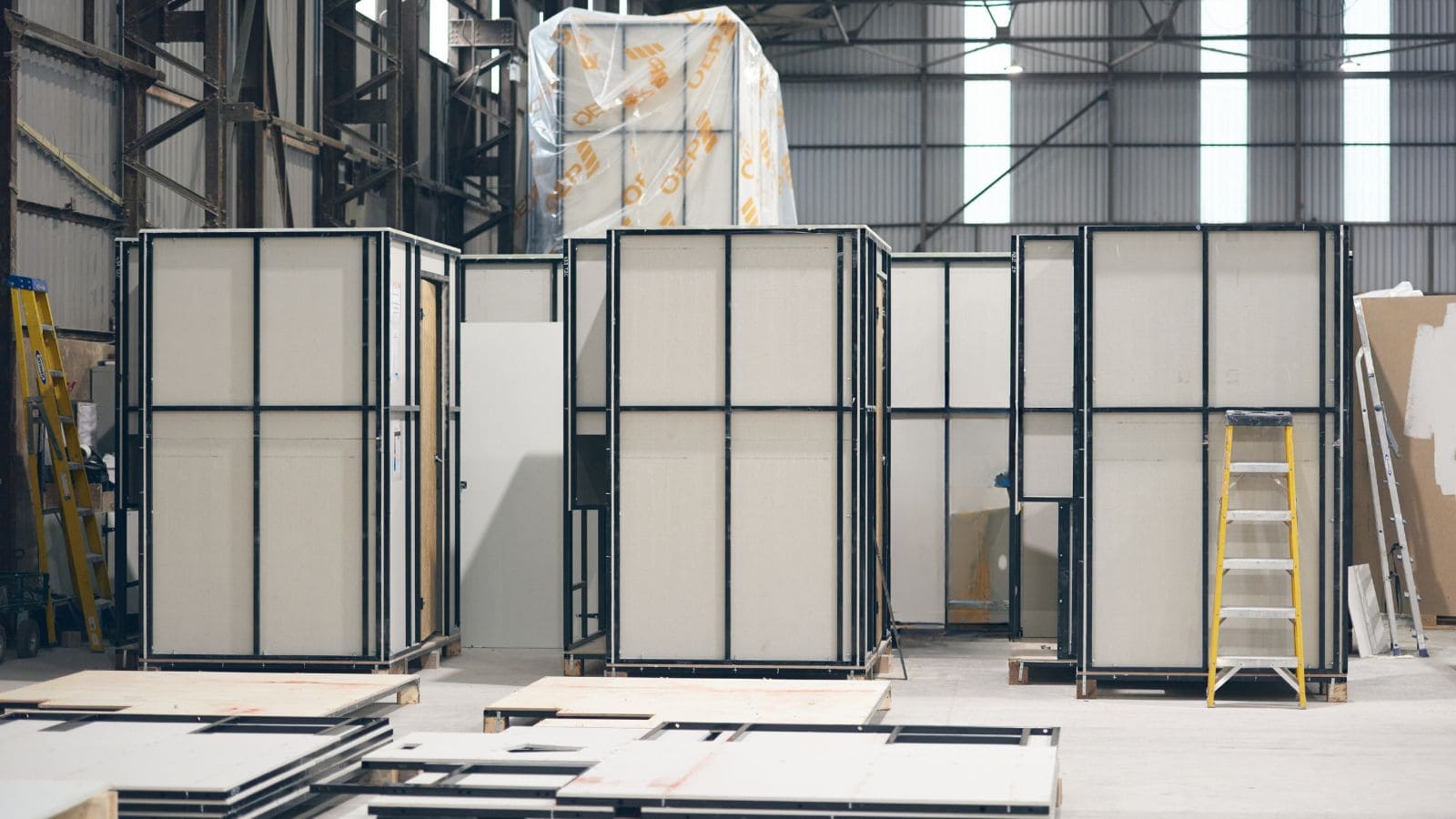
Now that we have discussed the conditions and design choices. It’s time to move on to the preparations and onsite assembly. To protect the budget during execution, developers must tightly manage three critical phases:
- Early Engineering & Procurement: Factory production lines run on strict schedules, so structural and MEP designs must be completely locked in early. Design changes after production has started will incur extra costs and disrupt the manufacturing queue.
- Streamlined Quality Control (QC): Fixing a plumbing or electrical issue in a controlled factory is highly efficient and cost-effective. Rigorous factory QA checks ensure modules arrive ready for rapid connection, avoiding rework and preventing delays.
- Coordinated Delivery & Crane Work: While modules are built offsite, foundation work happens simultaneously onsite. The logistics of transporting oversized modules and managing crews and machinery like cranes add to your budget. To prevent this, developers should look for manufacturers that offer a turnkey, one-stop service that includes fabrication, transportation, and onsite assembly within a single contract.
Cost Advantages: Modular vs. Traditional Hotel Construction
Modular building and traditional construction methods carry fundamentally different financial structures. The table below breaks down exactly where modular construction generates savings across hard costs, project scheduling, and financing exposure.
How to Evaluate Proposals and Avoid Hidden Costs
Comparing bids from different modular hotel construction companies can be risky. A lower headline price often just means a narrower scope that hides costs like FF&E, site work, or utility connections. Therefore, successful developers evaluate manufacturers based on three critical factors:
- Factory Capacity & Lead Times: Can they meet your schedule?
- Brand Compliance: Do they have experience meeting strict modular hotel standards?
- Delivery Track Record: Can they handle complex logistics and international shipping?
Partner with a Proven Modular Expert
With successful project experience across more than 50 countries and dedicated experience in modular resort and hotel development, DEEPBLUE SMARTHOUSE combines controlled factory manufacturing, in-house engineering, and customized hospitality design support. We work closely with developers to create transparent, accurate budgets with no hidden surprises.
Ready to evaluate the true cost of your next hospitality project?
[Contact DEEPBLUE SMARTHOUSE today] to discuss your site plans and get a comprehensive, like-for-like modular construction quote.
Frequently Asked Questions (FAQ)
How does the cost to build a hotel using off-site construction compare to conventional construction?
While the base price per room for raw materials and interior finishes might be similar, permanent modular construction saves money through efficiency. By minimizing on-site waste and drastically reducing local labor costs, developers often see up to a 20% reduction in total project costs compared to traditional construction methods.
Is a modular system only suitable for standard budget hotels, or can it be used for a boutique hotel or luxury hotel?
While it is absolutely ideal for standard hotel types like extended-stay properties, modern volumetric building is highly adaptable. Major hotel chains and independent developers successfully use prefab methods for upscale and branded hotel properties.
For complex luxury sites, developers simply use modular units for the guestrooms while building grand custom lobbies onsite.
How does choosing modular methods prevent common construction delays?
Because the modular units are manufactured indoors within a climate-controlled factory, the build time is completely protected from the weather disruptions that normally plague a traditional construction site. This predictable environment guarantees faster construction, keeping your opening date and budget strictly on track.
Why is there a growing demand for modular solutions among hotel developers?
Aside from the reduction of initial hard costs, developers also significantly minimize their financing carry costs on construction loans with modular method.
Because the property opens months earlier, it starts generating revenue faster. This highly predictable return on investment is exactly why leading modular hotel manufacturers are seeing record demand across the hospitality industry.