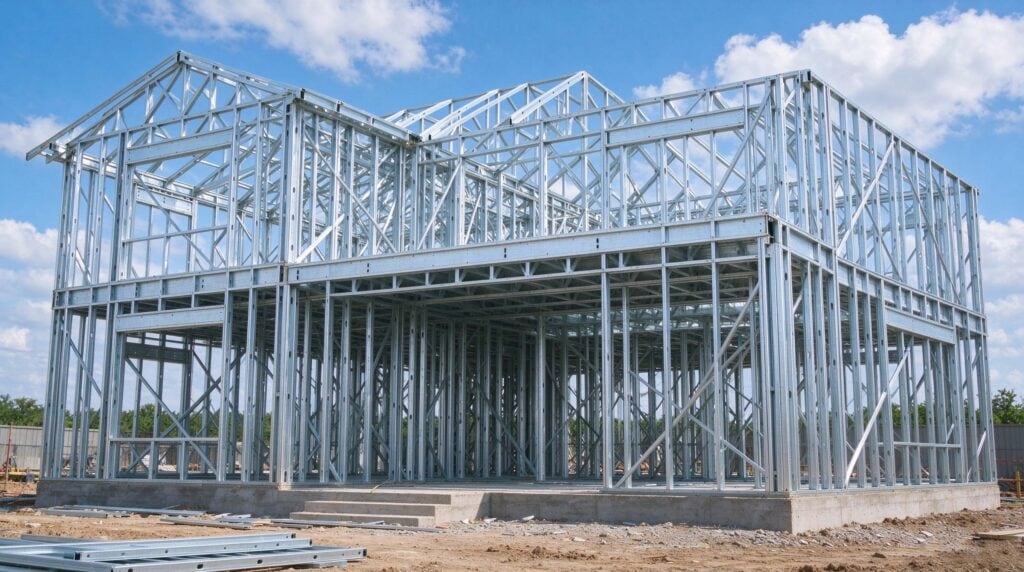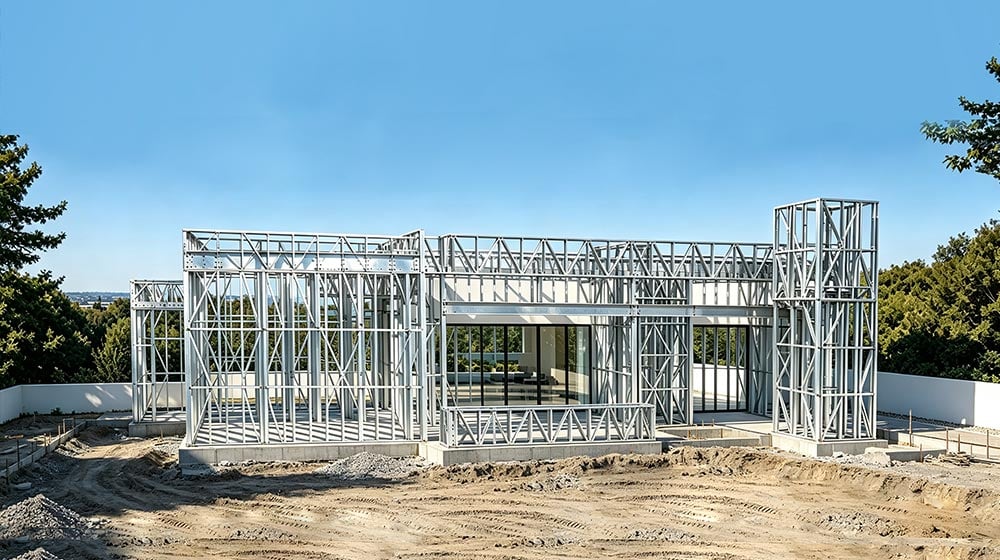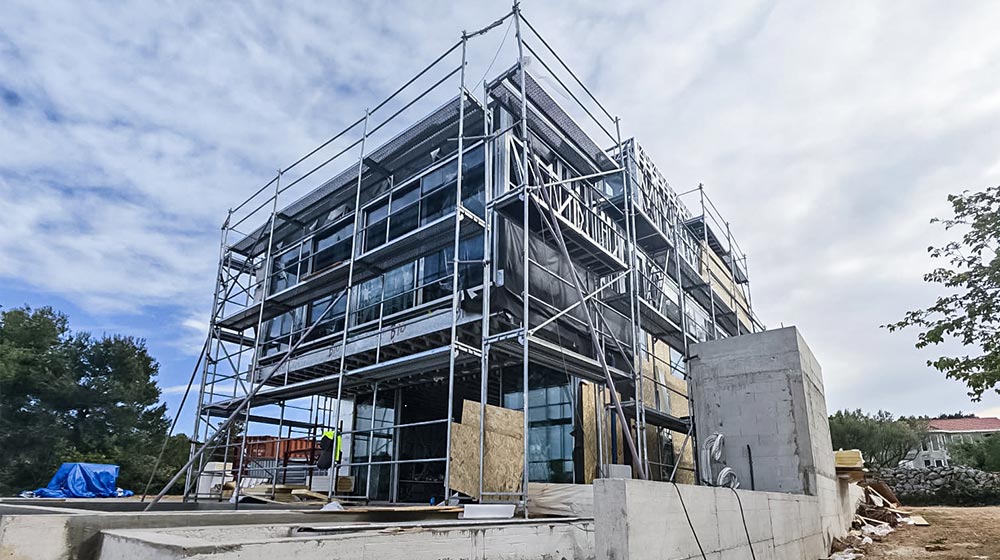
Africa’s real estate sector stands at a unique geopolitical and economic inflection point. Driven by rapid urbanization, a booming young population, and expanding middle-class consumption capacity, the continent’s property market has evolved into one of the world’s most promising trillion-level blue-chip sectors. However, long-standing structural bottlenecks—including a massive housing shortage, chronic power scarcity, backward construction modes, and high operational costs—have severely constrained the high-quality development of Africa’s urban residential infrastructure. From a global economic and industrial geography perspective, the innovative integration of Light Steel Frame (LSF) construction and Building Integrated Photovoltaics (BIPV) represented by DEEPBLUE SMART HOUSE provides a systematic, scalable, and sustainable solution to break Africa’s real estate development deadlock, rewriting the developmental logic of Africa’s residential economy.
Current industry data reveals the extreme imbalance between supply and demand in Africa’s housing and energy sectors. The continent’s cumulative housing gap has exceeded 50 million units, with a housing financing shortfall surging to $1.4 trillion. In sub-Saharan Africa alone, approximately 600 million people live without stable grid power. Traditional brick-and-mortar construction, which dominates the local market, is no longer adaptable to Africa’s rapid urbanization pace. With a conventional construction cycle of 6 to 12 months, a material waste rate of 10%–15%, and frequent delays and cost overruns, traditional building methods feature low efficiency, high consumption, and poor scalability, becoming a core obstacle restricting large-scale affordable housing construction and commercial real estate iteration across Africa.
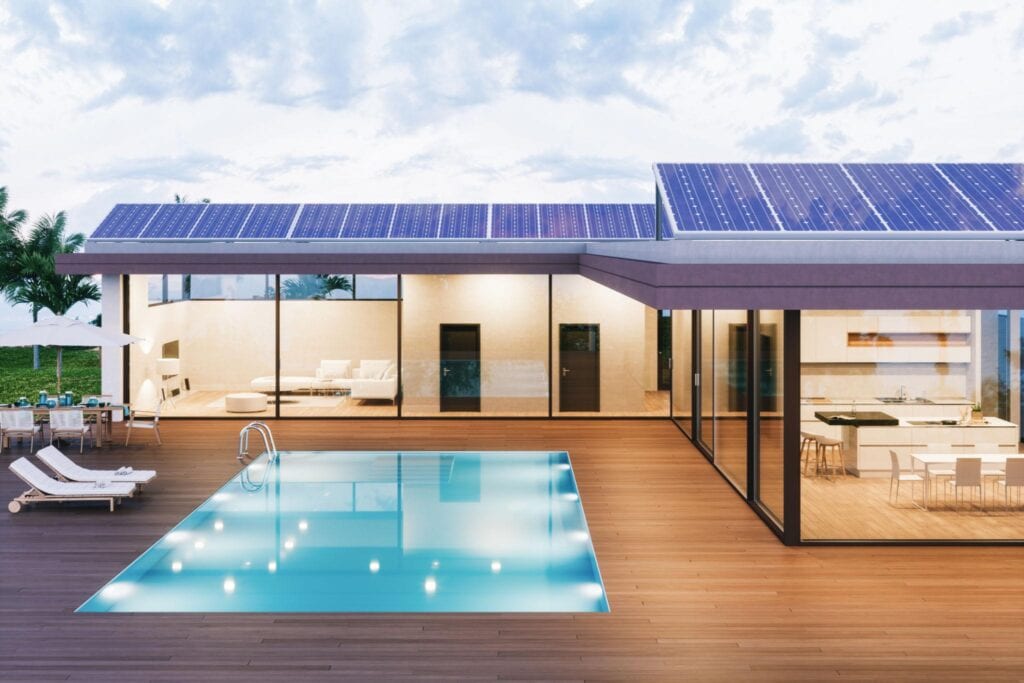
As a national high-tech enterprise specializing in prefabricated green buildings, Ningbo DEEPBLUE SMART HOUSE has accumulated mature global project delivery capabilities since its founding in 2009. Equipped with 78 core patents, certified by ISO management systems and international mainstream standards, the company’s products have been exported to more than 60 countries, with a cumulative delivery of over 10,000 prefabricated buildings. With standardized global certification adaptation capabilities and cross-regional project experience, it has become a benchmark strategic partner for real estate developers in Kenya, Nigeria, Zambia, and more than 20 African countries.
1. Geoeconomic Advantage: LSF Prefabrication Cuts Costs and Accelerates Capital Turnover
In the context of Africa’s tight capital flow and high financing costs, construction cycle and cost control are the core indicators determining real estate project profitability. DEEPBLUE’s full factory prefabrication and on-site assembly model completely subverts the drawbacks of traditional on-site wet construction. This disruptive construction mode shortens the overall project cycle by 80% compared with traditional buildings. Meanwhile, it controls the material loss rate within 3%, a reduction of more than 30% versus traditional processes, cutting the single-unit construction cost by 18%–25%.
Benefiting from Ningbo Port’s superior maritime logistics location, the company realizes efficient centralized production and cross-border integrated transportation, greatly compressing project delivery cycles. For African developers, the substantial shortening of construction cycles directly accelerates capital recovery and turnover efficiency, effectively reducing the risk of capital chain pressure brought by long-term project stacking, and significantly improving the overall profit margin of real estate projects—delivering core economic value adapted to Africa’s high-risk, fast-paced market environment.
2. Energy Geopolitics Breakthrough: BIPV Energy Independence Solves Core Living Pain Points
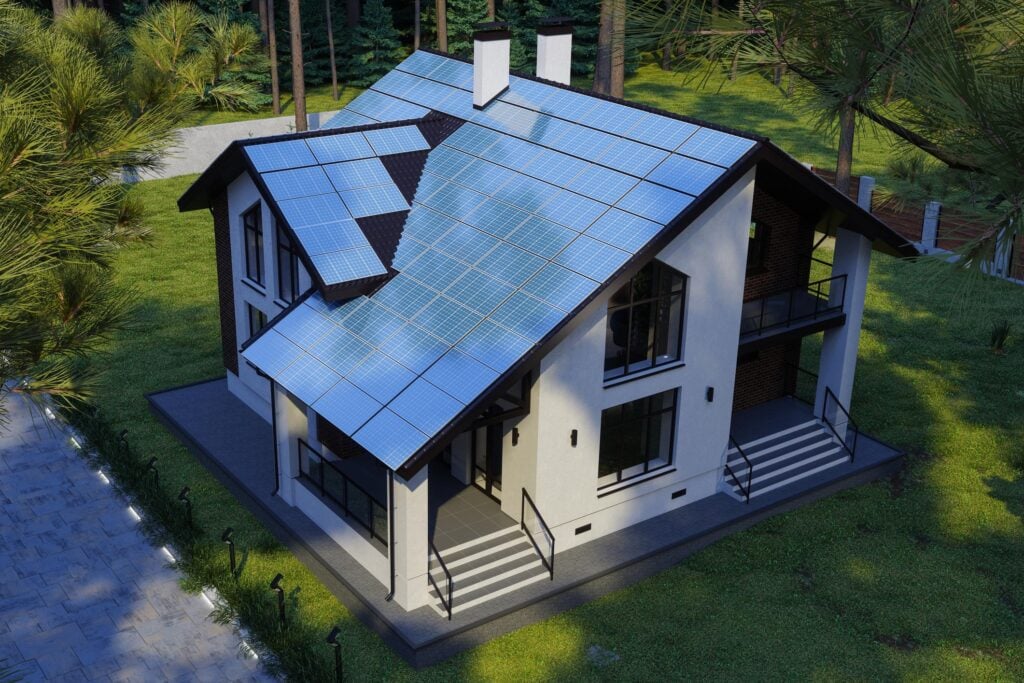
Energy shortage is the most prominent geoeconomic constraint on African residential development. Local reliance on diesel power generation leads to a high electricity cost of $0.3–$0.5 per kWh, pushing up residents’ living costs and restricting the commercial value of real estate projects. DEEPBLUE’s innovative LSF+BIPV integrated solution precisely targets this structural pain point, realizing organic integration of buildings and clean energy systems.
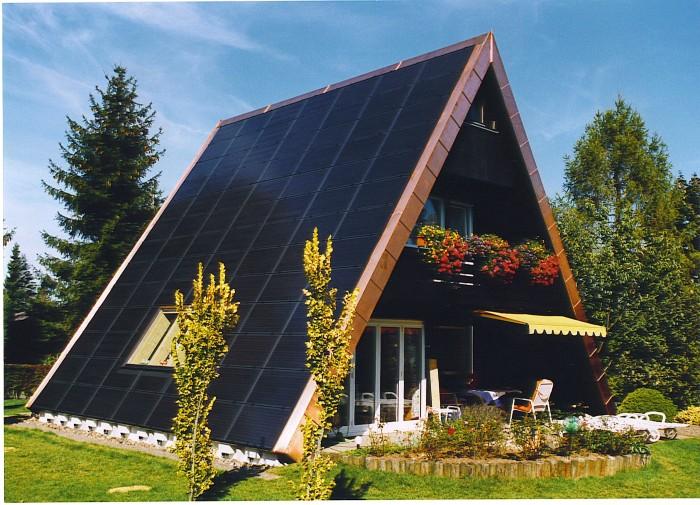
The DEEPBLUE SMARTHOUSE company’s exclusive pre-reserved photovoltaic tracks on roofs and embedded energy storage spaces in walls support a standard 5kW photovoltaic power generation system matched with a 10kWh lithium iron phosphate battery energy storage module, fully meeting the full-scenario power demand of family life and daily production. This solution reduces the local residential power cost to $0.08–$0.12 per kWh, a drop of over 70% compared with diesel power generation, enabling each household to save $300–$500 in annual electricity expenses.
More importantly, building energy independence creates exclusive commercial premiums for real